
Reference Checking Through Relationships
How to leverage your network for more candid, thorough reference checks during due diligence.
Verata Research Team
January 2025
In this guide
Why Back-Channel References Matter
Candidate-provided references are curated for success. They'll say nice things—that's why they were chosen. Real due diligence requires back-channel references: people who can speak candidly because they weren't selected by the candidate.
The Candor Gap
Candidate references: "She's great, you'd be lucky to have her" Back-channel references: "She's strong operationally but struggled with board communication at her last role"
Which is more useful for your decision?
What Back-Channels Reveal
- Performance reality vs. narrative
- Working style and management approach
- How they handled adversity
- Why they really left previous roles
- Cultural fit indicators
The PE Context
For PE-backed companies, back-channel references are especially critical:
- Executives must work with boards and sponsors
- Performance expectations are high and timelines are short
- Cultural fit with ownership matters
- Transaction experience claims need verification
Finding Back-Channel References
The goal is to find people who worked with the candidate and who are in your network—or reachable through it.
Career History Mining
Start with the candidate's work history:
- For each role, identify potential references:
- - Direct reports
- - Peers
- - Supervisors
- - Board members
- - Investors
- Cross-reference against your network:
- - Who do we know at those companies?
- - Who knows people at those companies?
- Identify the strongest paths
Using Relationship Intelligence
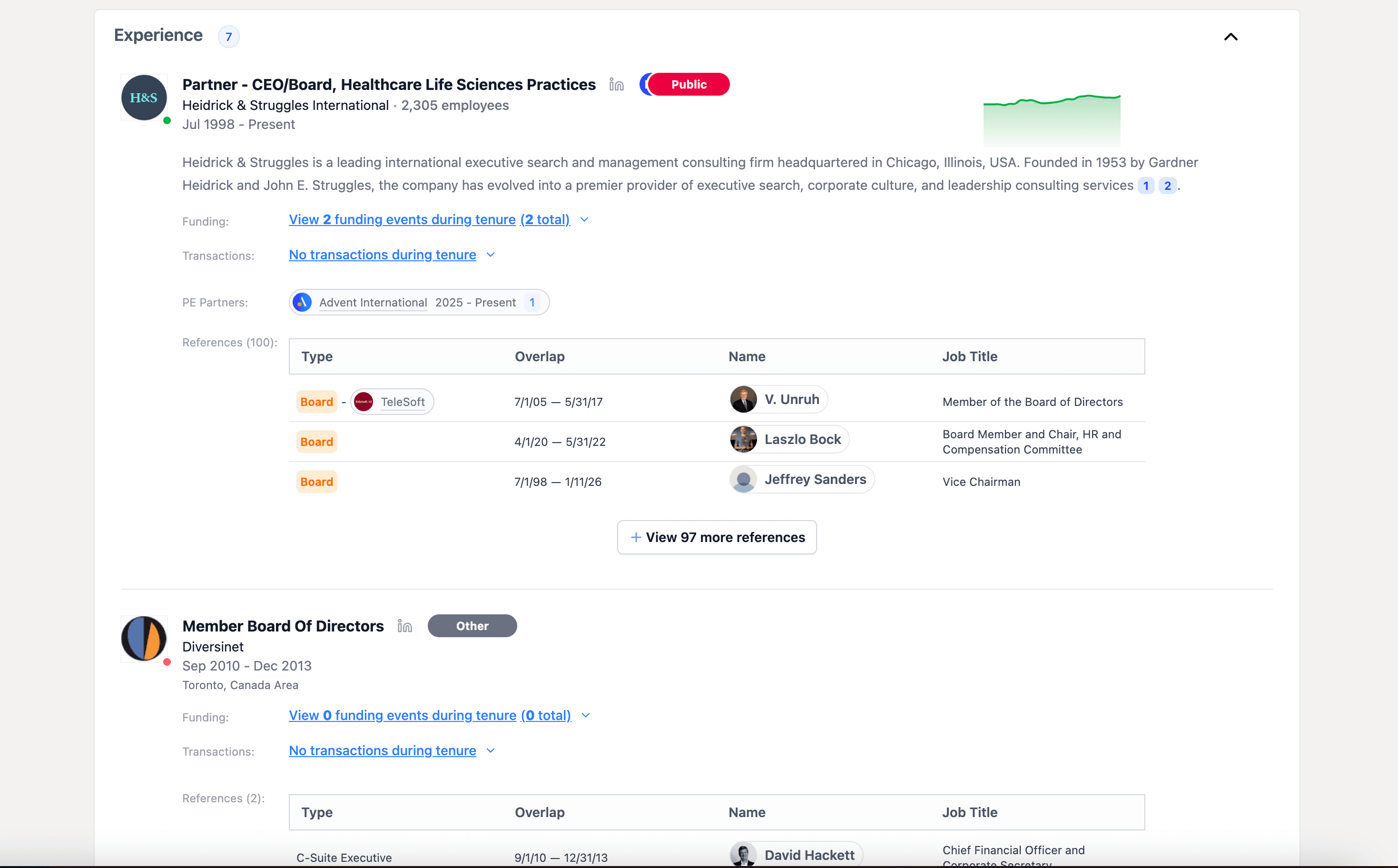
Platforms like Verata automate this process:
- Input the candidate's career history
- The system identifies overlaps with your network
- See who in your ecosystem worked alongside the candidate
Without tools, this research takes hours per candidate. With tools, it takes minutes.
Reference Diversity
Aim for references from multiple contexts:
- Different companies in their career
- Different relationship types (reported to them, worked alongside, supervised them)
- Different time periods (recent and historical)
- Both successful and challenging situations
Structuring Reference Conversations
Unstructured reference calls meander and miss critical information. Structure ensures consistency and depth.
Opening the Conversation
- Explain your role and context
- Clarify confidentiality expectations
- Ask about their relationship with the candidate
- Confirm the time period and context they're speaking to
Core Questions
Performance and Results - What were their key accomplishments in the role? - How would you describe their work quality and output? - Did they meet expectations? Exceed them?
Working Style - How would you describe their management approach? - How did they handle pressure and adversity? - What was their relationship with their team?
Strengths and Development Areas - What are their greatest strengths? - Where would they need to develop in a more senior role? - What type of environment brings out their best work?
Specific Situations - Can you tell me about a time they faced a significant challenge? - How did they handle [specific situation from their background]?
The Key Question - Would you work with them again? In what capacity?
Closing - Is there anything else I should know? - Is there anyone else you'd recommend I speak with?
Reading Between the Lines
What people don't say is often as important as what they do say. Learn to hear the subtext.
Positive Signals
- Specific examples and stories (they remember because it mattered)
- Enthusiasm in tone (genuine respect comes through)
- Offering additional references unprompted
- "I'd work with them again in a heartbeat"
Warning Signs
- Vague or generic praise ("They were... good")
- Hedging language ("In the right environment...")
- Changing the subject
- Damning with faint praise
- Hesitation before answering
Translation Guide
"They have high standards" → May be difficult to work for "They're very entrepreneurial" → May struggle with process and governance "They're great with the details" → May not be strategic "They're a big-picture thinker" → May miss important details "They moved fast at [Company]" → Left under pressure
Verification Questions
When you sense hesitation:
- "It sounds like there might be more to that story?"
- "What would someone who didn't work well with them say?"
- "What would they need to be successful in this role?"
Most people won't lie directly but will avoid topics. Give them permission to share concerns.
Documenting and Synthesizing Findings
Reference notes are only valuable if they're captured systematically and synthesized for decision-making.
Documentation Standards
For each reference call, record:
- Reference name and relationship to candidate
- Time period of interaction
- Key strengths cited
- Development areas or concerns
- Notable quotes (verbatim when possible)
- Overall sentiment rating
- Follow-up questions raised
Synthesis Framework
After completing reference calls, synthesize findings:
Consistent Themes What came up repeatedly across references?
Contradictions Where did references disagree? What explains the discrepancy?
Red Flags What concerns warrant further investigation?
Role Fit Assessment Based on references, how well does the candidate fit this specific role?
Presenting Findings
Structure the summary for decision-makers:
- Executive summary (2-3 sentences)
- Key strengths (with supporting quotes)
- Development areas (with context)
- Risk factors (with mitigation options)
- Overall recommendation
Integrating with Diligence
Reference findings should inform: - Final hiring decisions - Onboarding planning - Management structure - Early warning indicators to monitor
Related Guides
Building an Executive Talent Pipeline
A step-by-step guide to building a proprietary database of portfolio company executive candidates.
Getting StartedRelationship Mapping 101
The fundamentals of building and maintaining a relationship map for your PE firm. From data collection to activation strategies.
StrategyThe Complete Guide to Proprietary Deal Sourcing
A comprehensive playbook for building a systematic proprietary origination process. Learn how top PE firms source 50%+ of their deals through relationships.
Ready to Put This Into Practice?
See how Verata can help you implement these strategies with relationship intelligence built for PE.